The People Who Made Us
This Hispanic Heritage Month, three CFI team members share personal reflections on the families, communities and cultures that shaped their lives and helped build Colorado.
 EN
EN
TABOR might promise a government on a diet and fatter refund checks, but Colorado’s wallet feels the pinch. It’s one of the tightest tax laws in the country, quietly deciding what our state can and can’t afford. If this makes you scratch your head or mutter, “Wait, that’s fishy…” you’re in good company.
June 6, 2025
…it has become nearly impossible to lower the cost of housing in Colorado?
TABOR is a major hindrance to investing in affordable housing in Colorado and limits our ability to address the increasing cost of living in the state. Across Colorado, people on fixed incomes, working people, and their families struggle to afford to remain housed. Essential service workers, teachers, and nurses often cannot afford to live close to where they work.
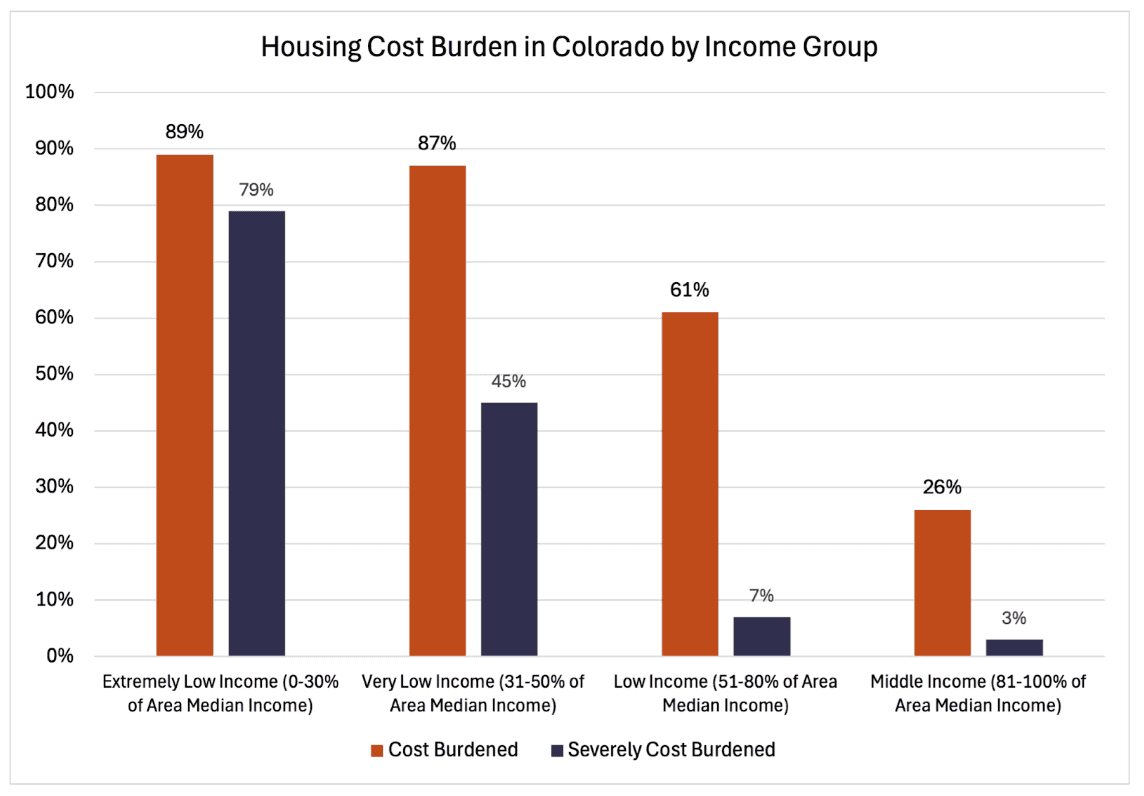
Source: National Low Income Housing Coalition, The Gap Report: Colorado Data (2025), https://nlihc.org/gap/state/co.
In Colorado, a person earning the state minimum wage has to work 85 hours a week to afford a modest one-bedroom apartment at fair market rent. In Colorado, there are only 26 affordable and available rental homes for every 100 renter households at or below the threshold of extremely low income, those with earnings at 0 to 30 percent of area median income. The state faces a shortage of 134,281 affordable rental homes.
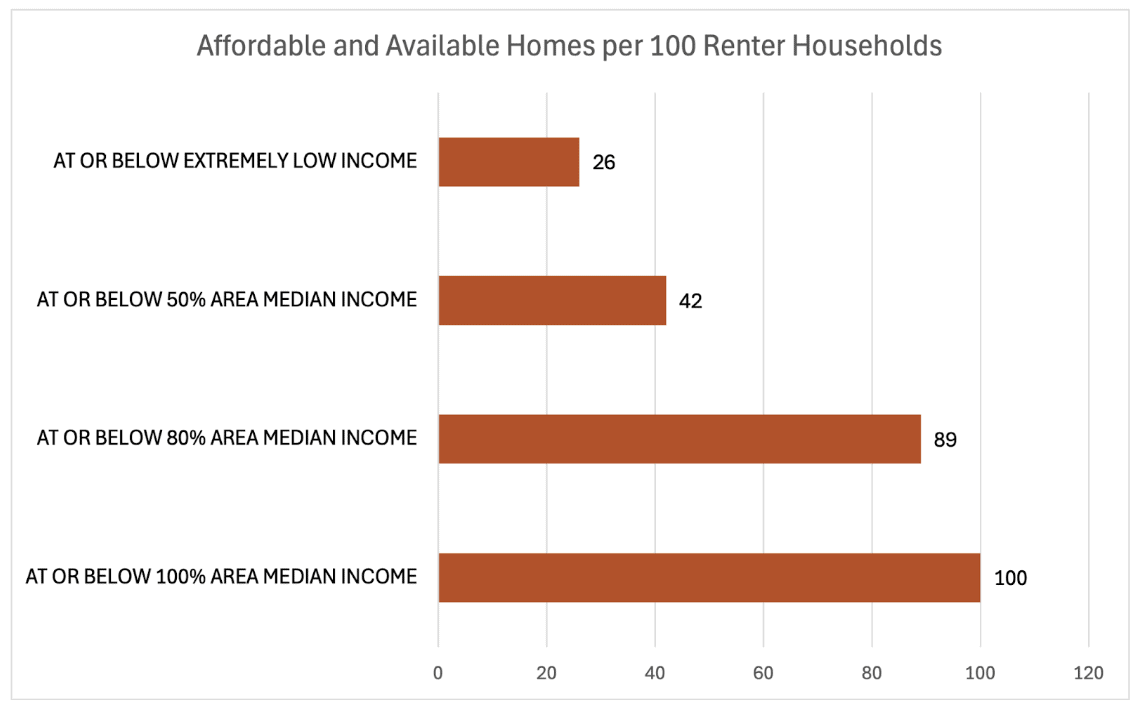
Source: National Low Income Housing Coalition, The Gap Report: Colorado Data (2025), https://nlihc.org/gap/state/co.
Cost to Families: Renter households spending more than 30 percent of their income on housing costs and utilities are cost-burdened; those spending more than half of their income are severely cost-burdened. In Colorado, 89 percent of extremely low-income renters, those earning between 0 and 30 percent of area median income, are cost-burdened, and 79 percent of those renters are severely cost-burdened. Through Proposition 123, the state dedicates 0.1 percent of income taxes to affordable housing. However, Colorado needs more dedicated funding sources to invest in increasing housing needs. Currently, funding from Proposition 123 is the only source of state funding dedicated solely to expanding access to affordable housing.
Long-Term Costs: TABOR is a major obstacle to directly funding the expansion of affordable housing through the budget, which is why tax expenditure mechanisms are often used as a workaround for funding programs in Colorado, via credits, deductions, or exemptions. There are several strategies Colorado could employ to provide targeted relief through tax policy and raise revenue dedicated to funding state affordable housing solutions, but TABOR is holding the state back.
A great option many states use to target wealth to fund affordable housing is a real estate transfer tax. A real estate transfer tax is paid when the title of a property is transferred between owners, separate from property taxes and recording fees. These taxes are often based on the value of a property, meaning people with higher means and ability to pay pay more. Colorado does not have a real estate transfer tax because implementing this kind of tax is banned under TABOR.
Thirty-seven states levy a real estate transfer tax, and many use that revenue to invest in affordable housing. The solution is clear. If the state wants to create a sustainable way to address high rents, it must address how TABOR holds it back.