Poverty in Colorado: Rising Faster Than Your Rent (and HR1 Isn’t Helping)
septiembre 12th, 2025
Chris Stiffler
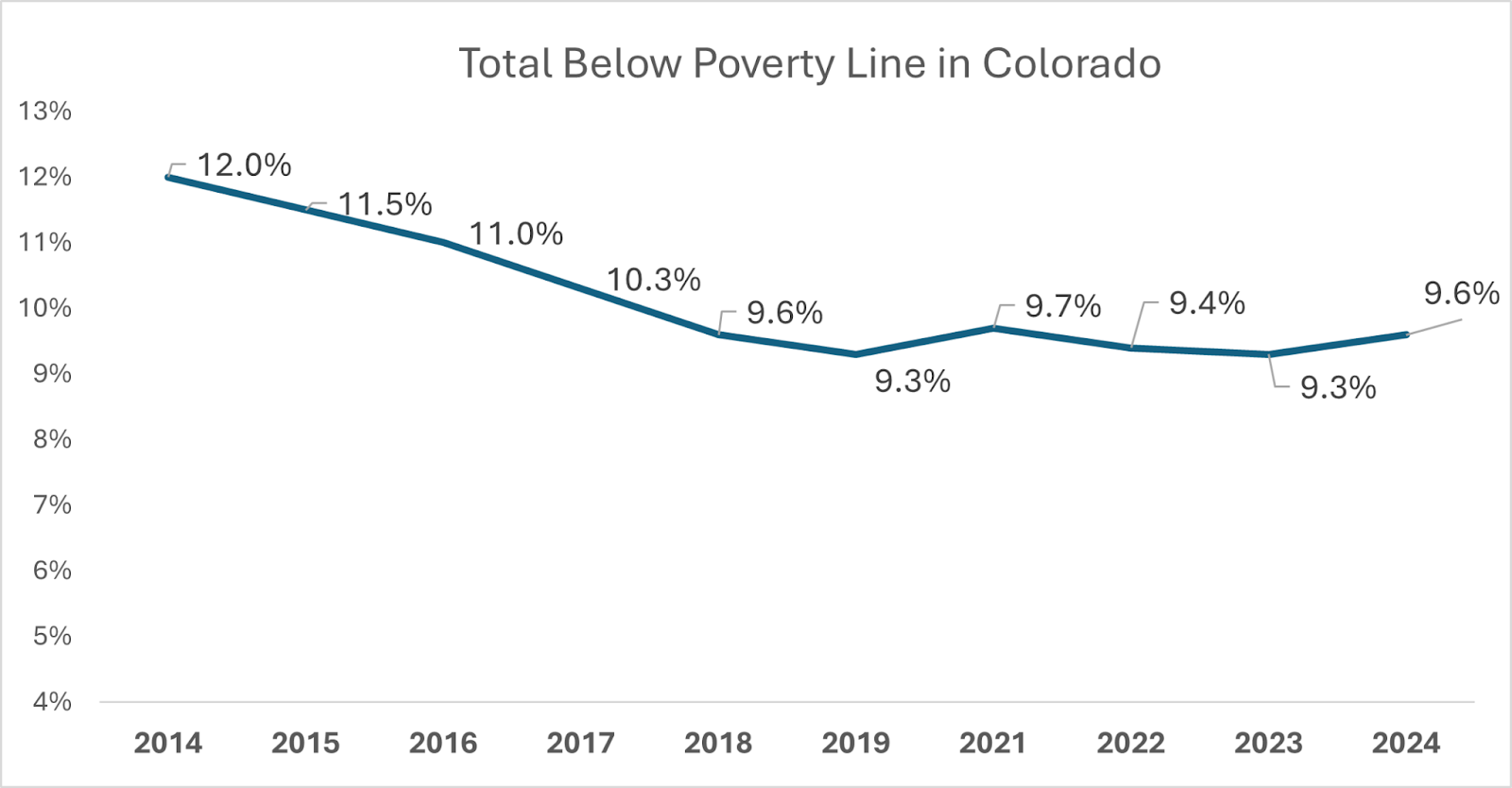
The U.S. Census just released new data on poverty in 2024, and while the national headlines are showing a slight decrease in the overall poverty rate in the country, Colorado’s numbers tell a more sobering story.
According to the latest census data, Colorado’s poverty rate ticked up in 2024. It’s still technically “below” the national average but there’s no champagne celebration here, mostly because champagne costs money, and people are too busy selling their plasma to afford rent.
Here’s the kicker: The federal poverty measure is the same in every county in America, whether you live in rural Mississippi or downtown Boulder—where $20,000 a year barely covers your dog’s acupuncture. But Colorado has one of the highest costs of living in the country—especially for housing, childcare, and health care. So when the data says Colorado’s poverty rate is “lower,” it doesn’t mean people aren’t struggling. It just means the bar for being officially counted as poor hasn’t moved—even though rents have. Even though grocery bills have. And child care? At this point, most parents are just Venmoing their entire paycheck directly to a 22-year-old named Madison who knows CPR and now has access to your Netflix password.
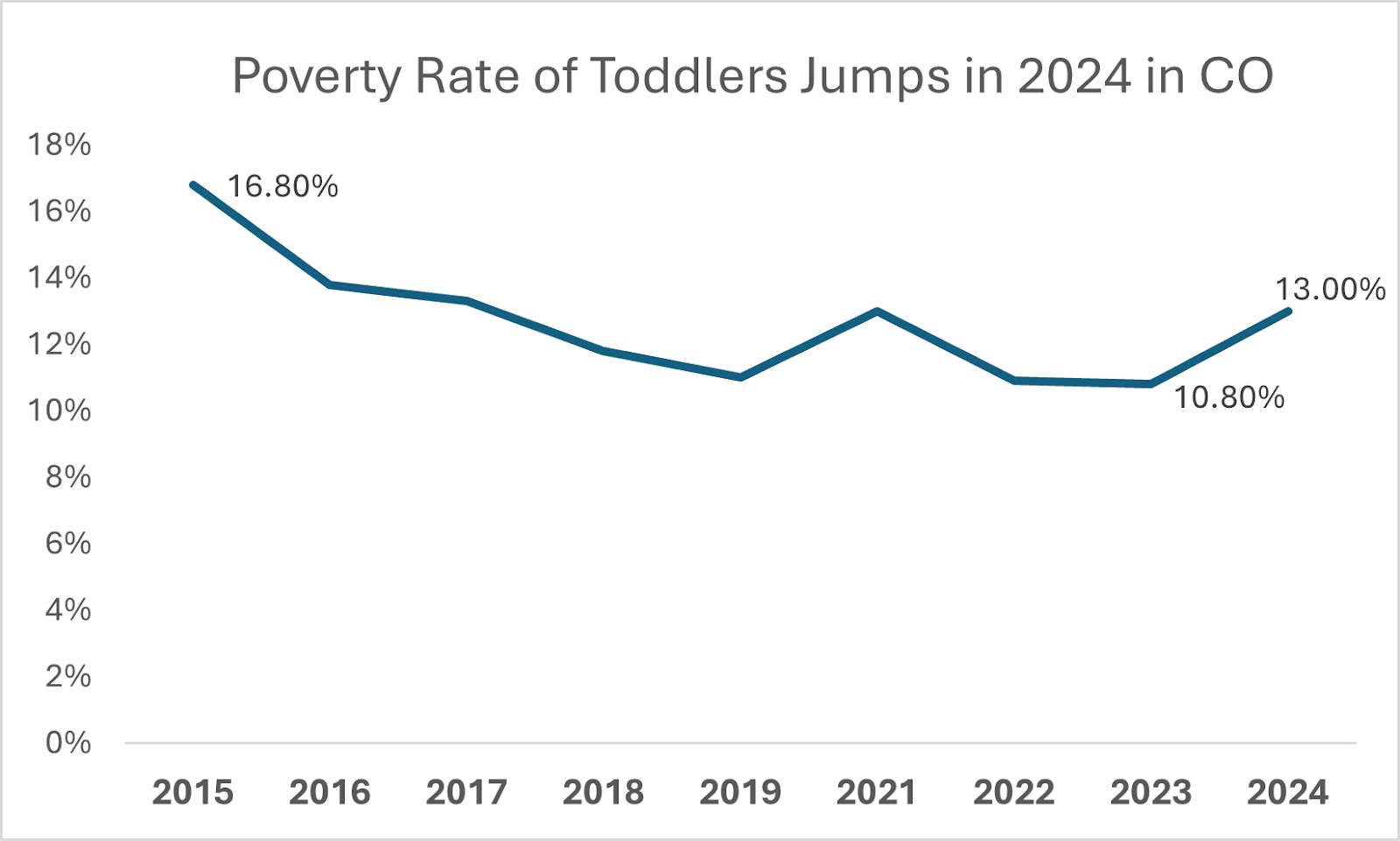
Even more concerning? The poverty rate for children under age 5 rose in Colorado. Which is bad. You may recall that age 0 to 5 is when tiny humans are supposed to be learning how to walk, talk, and not eat Legos—not wondering whether they’ll have dinner.
We’re not just talking about numbers. We’re talking about the years when brain development, nutrition, and early learning matter most. Research shows that poverty in the first five years of life leaves lasting marks on a child’s health, education, and future earnings.
Those early years shape everything from school readiness to lifetime income, which is why researchers track them so closely. Unfortunately, the way we measure poverty is about as precise as using a Fitbit to track nacho consumption. Most people think of the poverty rate as a simple line: do you make enough money or not? That’s the official poverty measure, and it only counts cash income like wages and Social Security. The Supplemental Poverty Measure (SPM) digs deeper.
It adds resources families actually use—like food stamps, housing help, and tax credits—and subtracts unavoidable costs like taxes, medical bills, and child care. In other words, the SPM doesn’t just ask “what’s in your paycheck?” It asks “what’s really left in your wallet after life happens?”
In 2021, the federal government’s pandemic relief package caused poverty statistics to drop substantially. Nationally, the Supplemental Poverty Measure (SPM) hit a record low as monthly Child Tax Credit checks and stimulus payments poured in. In Colorado, the impact was especially dramatic: the state’s SPM rate fell from 11.9% in 2019 to just 5.6% in 2021, a drop driven largely by those federal transfers. We don’t yet have the same hard data to measure how Colorado’s new 50% state Earned Income Tax Credit and refundable Child Tax Credit will move the needle in 2025, but a back-of-the-envelope estimate suggests they could trim child poverty by 2–3 percentage points—a meaningful improvement, even if not as historic as the one-time pandemic relief.
As beneficial as that would be, that state level EITC and CTC won’t be available in 2026 or 2027 because of the drop in Colorado’s tax revenue set off by large deductions to corporations from the federal spending bill known as HR1 (motto: ‘Making Poverty Poorer Since 2025). It gets technical but Colorado has to automatically import changes to our taxable income when the Federal government changes the federal taxable base. And our revenue drop turns off the extra EITC and CTC. So basically, the large corporate tax breaks means working families in Colorado lose theirs.
But don’t worry! Congress has a plan. Because HR1 also bravely addresses this crisis by making it harder to get Medicaid and food assistance. Because nothing says “we care about children” like defunding the programs that help them stay alive.
Gov. Jared Polis released his proposed 2026-27 state budget today, outlining spending priorities for the year ahead amid ongoing fiscal challenges. The Colorado Fiscal Institute is reviewing the proposal and…
Tomorrow, hundreds of thousands of Coloradans will wake up wondering how they’ll afford groceries. The Supplemental Nutrition Assistance Program (SNAP)—which helps more than 600,000 Coloradans, including roughly 300,000 children—is about…
Colorado’s 2025 Election Explained (Using Meatloaf) Voting on fiscal policy can be tricky in Colorado. You see complicated, accountant-approved sentences like: “Proposition MM caps tax deductions for joint filers earning…
Desde reformas fiscales hasta actualizaciones presupuestarias, desglosamos cuestiones complejas para mantenerle informado sobre las decisiones políticas que afectan a nuestras comunidades.